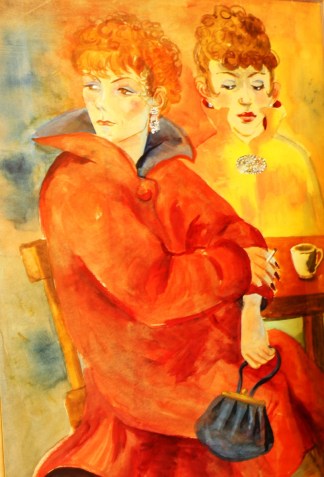
 From her earliest years when she scribbled on the prescription pads of her doctor father, Margarete manifested a desire to make art.


 Glasgow Women’s Library (GWL) has been providing information, resources and services since 1991. It developed from a broad-based arts organisation called Women in Profile, which was set up in 1987 with the aim of ensuring the representation of women’s culture during Glasgow’s year as the European City of Culture in 1990.
Women in Profile comprised community artists, grass-roots activists, academics, students and broad-based arts practitioners who collectively ran a year-long season of events, workshops, exhibitions, projects and other activities before and during 1990.
Over the course of that time Women in Profile gathered documentation and materials relating to its activities and, following consultation with the local community and women’s groups across the City of Glasgow, opened Glasgow Women’s Library in September 1991 in the Garnethill area.
Since 1991 thousands of women have contributed to the growth and success of the Library. The collection has been largely donated and there have been scores of women involved in managing its projects, volunteering and contributing their time, expertise, visions and energies.
Despite the absence of revenue funding and a complete reliance on volunteers, GWL was quickly established as the central general information resource about and for women in Glasgow.
Over the course of that time Women in Profile gathered documentation and materials relating to its activities and, following consultation with the local community and women’s groups across the City of Glasgow, opened Glasgow Women’s Library in September 1991 in the Garnethill area.
People from all sections of the community donated books, magazines, journals and ephemera and by 1994 GWL’s rapid growth, both in terms of collection size and user numbers, resulted in the need to relocate to larger premises. Consequently, the organisation moved to Glasgow City Council-owned premises at 109 Trongate where it continued to expand and develop, providing learning opportunities informally in the context of the lack of any funding for this purpose.
Tall Tales will be showcasing at GWL from 21st October – 16th December, with the Chandelier of Lost Earrings arriving at the earlier date of 26th September.
For more information about Glasgow Women’s Library including opening times and directions please click here
 The Tavistock and Portman NHS Trust and Centre is a specialist mental health trust based in north London. The Foundation was established in 1982 to support the work of the Tavistock Clinic and its innovative approaches to improving mental health and preventing ill-health. They specialise in areas of family mental health, young people and gender identity development.
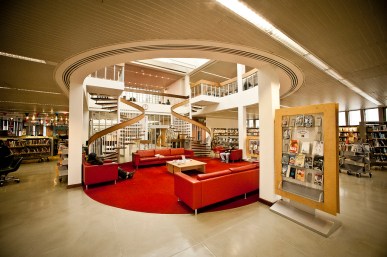 The Swiss Cottage Central Library is the central library of the public library service in the London Borough of Camden, and is housed in an architectural landmark building designed by Sir Basil Spence. The Library is also home to the Swiss Cottage Gallery, which runs a regular exhibitions programme reflecting the contemporary visual arts of Camden, the artist history of Camden and artists who have lived or worked in the borough and wider topics which reflect upon the local history of the area.
 The Freud Museum at 20 Maresfield Gardens in Hampstead, was the home of Sigmund Freud and his family when they escaped Austria following the Nazi annexation in 1938. It remained the family home until Anna Freud, the youngest daughter, died in 1982. The centrepiece of the museum is Freud’s study, preserved just as it was during his lifetime.
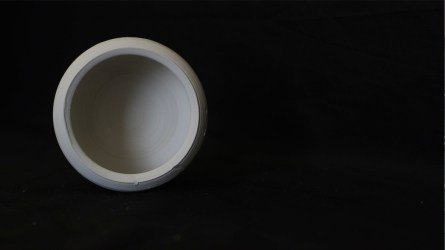 Sarah Forrest’s practice has explored the potential within language to shape her own and other people’s perception of things – be this a place, person, object or artwork. During the MFA programme, Forrest created a series of works that positioned her voice, as the artist, in relation to a number of sculptural objects she created and exhibited; the work hovering somewhere between fact and fiction. Her personal philosophy for making art asks what if? Or sometimes just why not? The work she makes is not usually tied to any one medium but her use of narrative has been consistent.

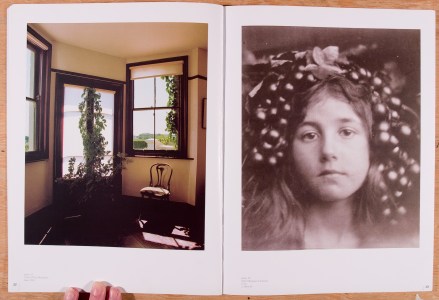


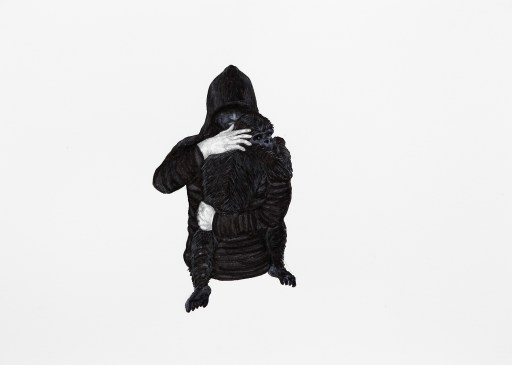
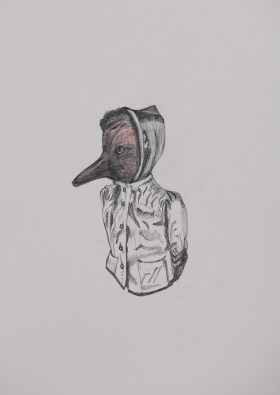 Visual artist Mirjam Somers (1971, NL) makes video works and drawings. After studying sculpture at the Hogeschool voor Kunst en Vormgeving ‘s-Hertogenbosch, she specialized in the medium of video during her postgraduate study at the Higher Institute for Fine Arts Antwerp (BE, 2000).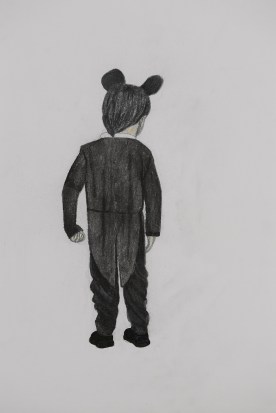
 talltalestouring.com